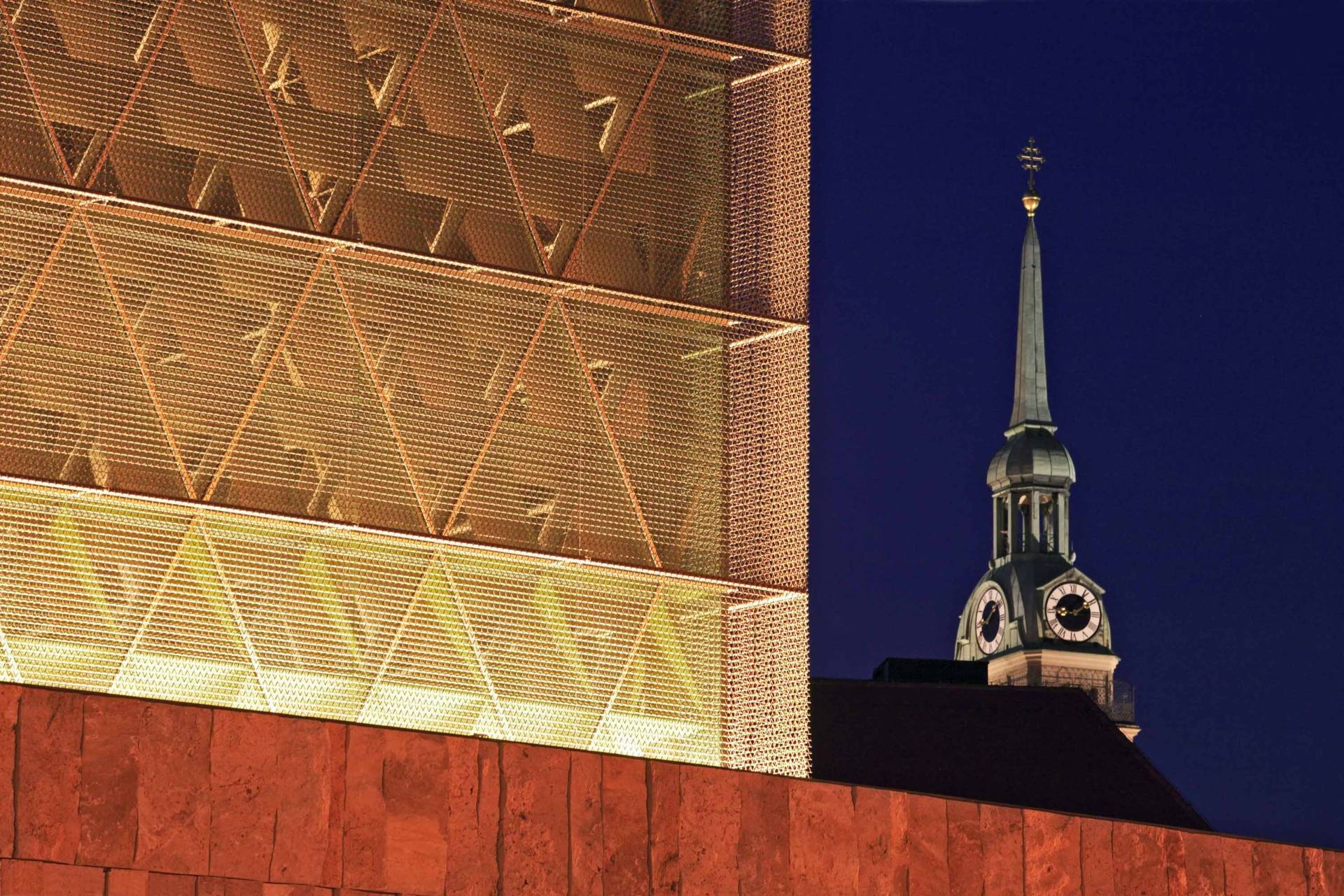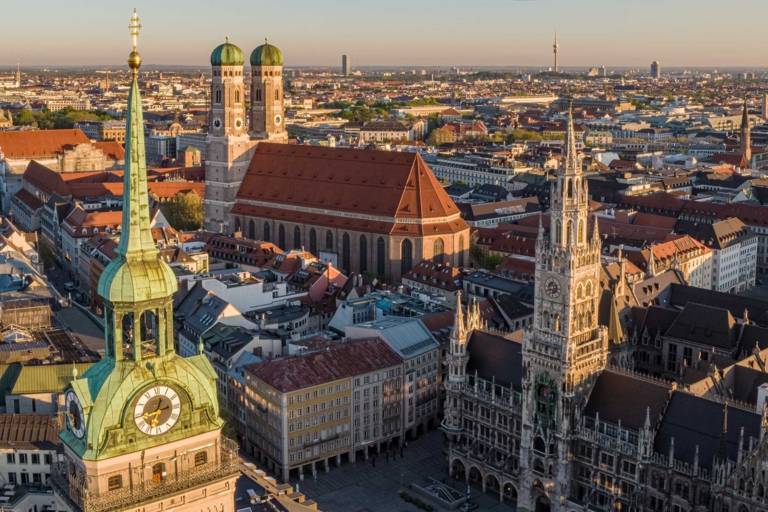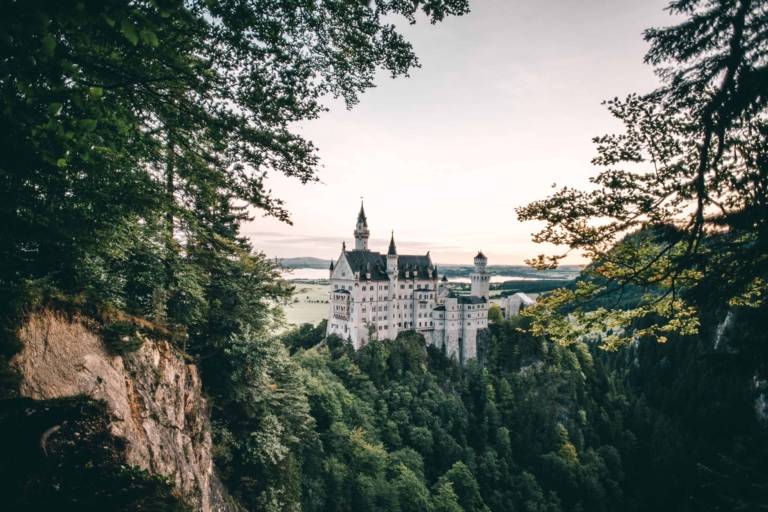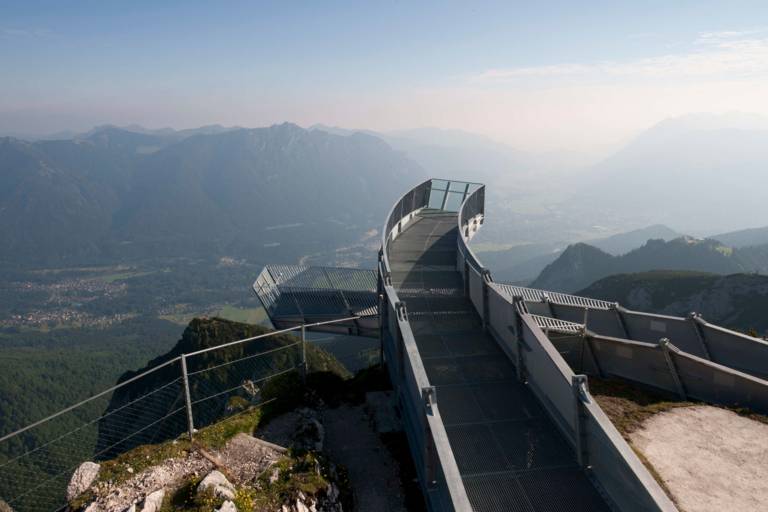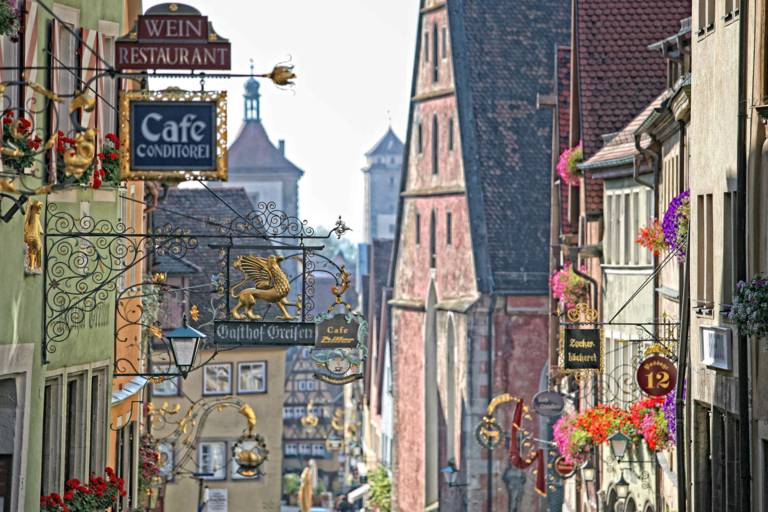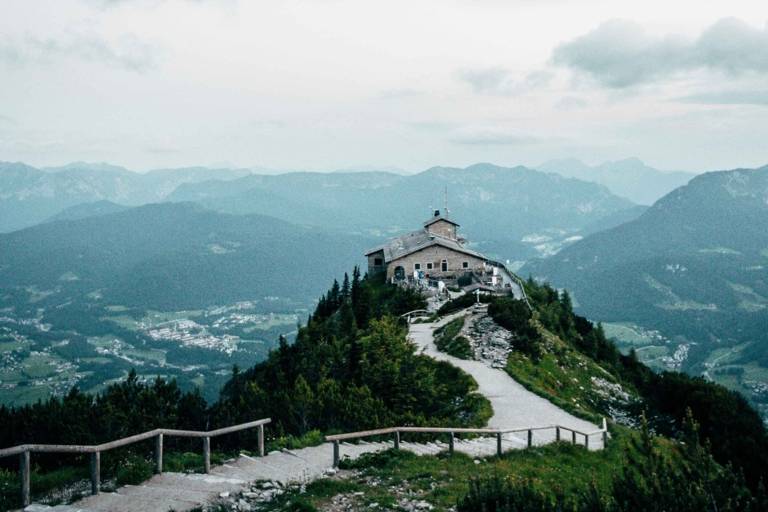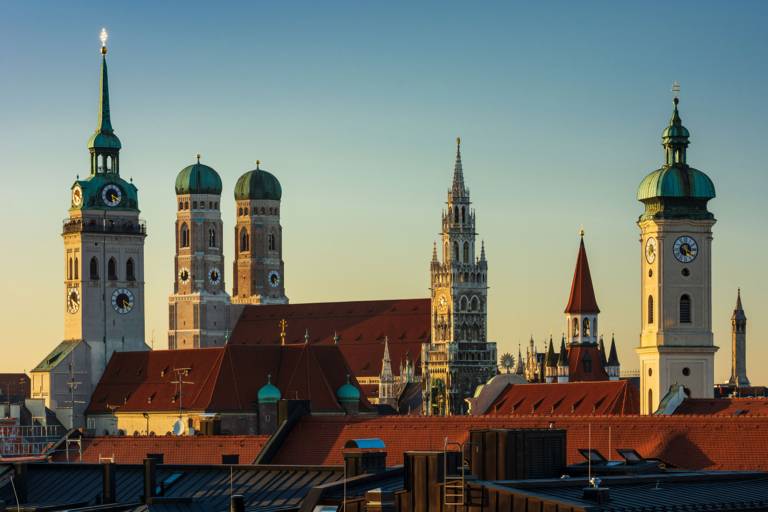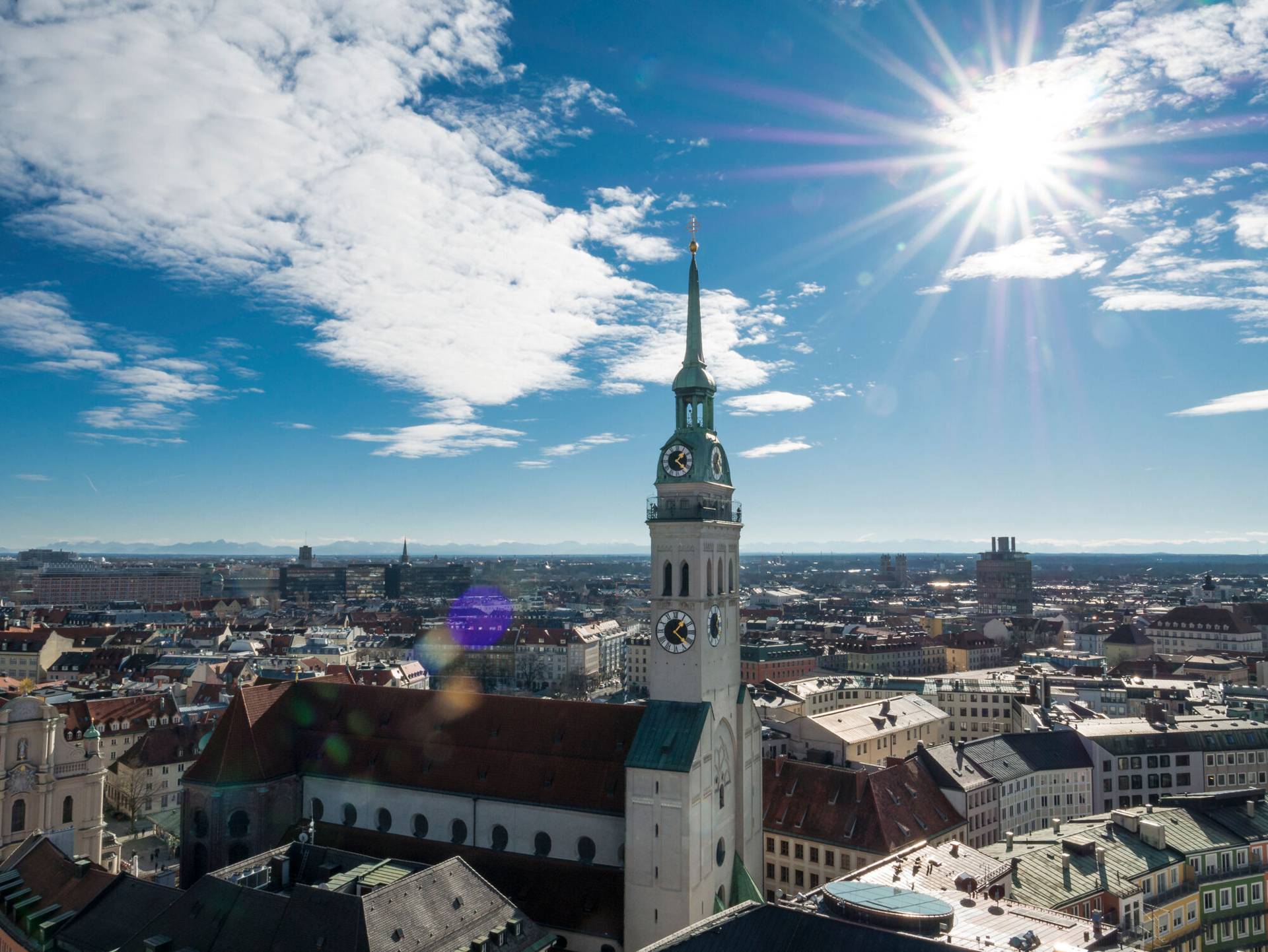
The Alter Peter in Munich with the Alps in the background.

Alter Peter

Alter Peter: Landmark and viewing platform

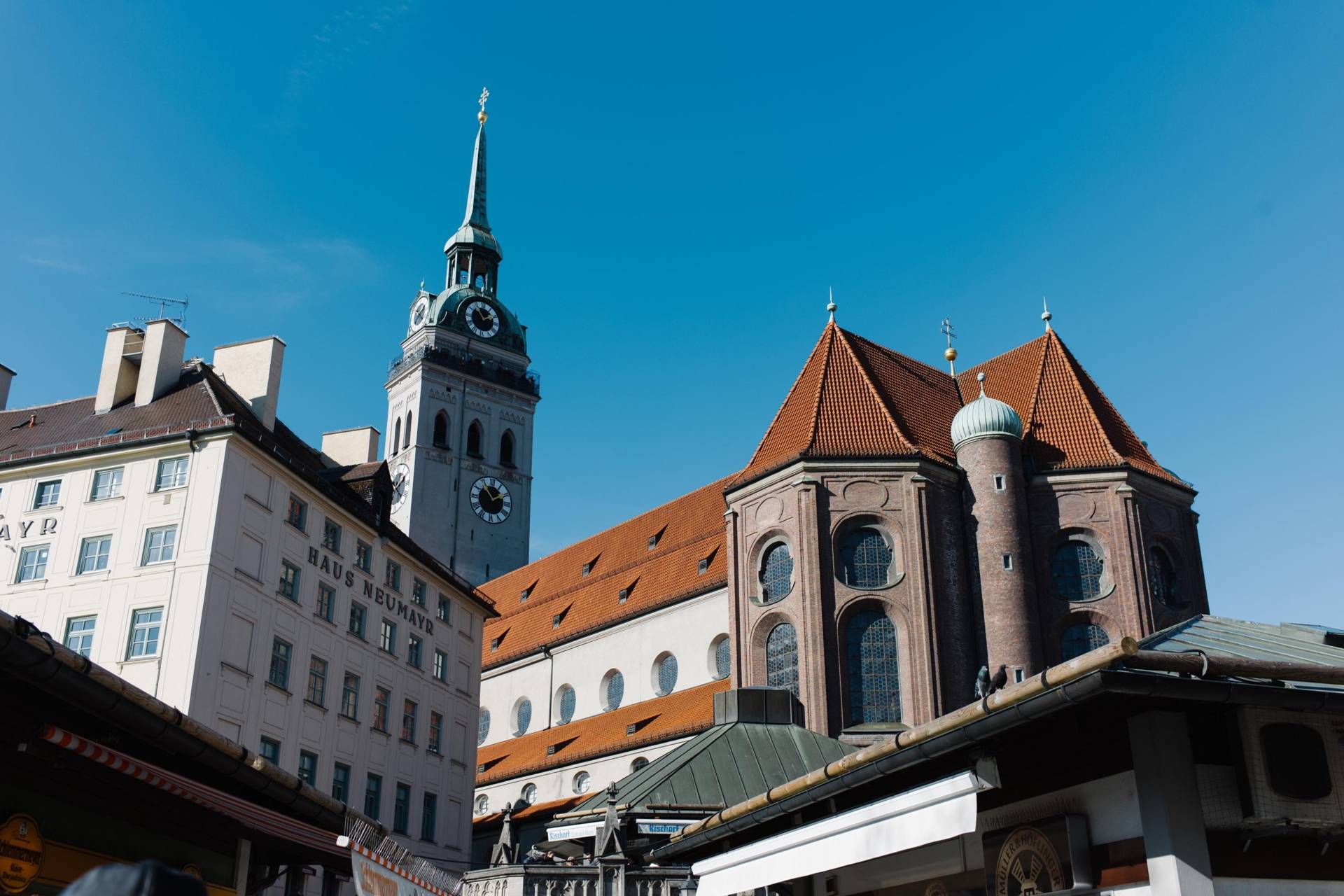
Alter Peter (Old Peter), as it is lovingly known by the people of Munich, affords one of the best views over the city’s rooftops. It is the tower to Munich’s oldest church, Peterskirche, which is located just behind Marienplatz.

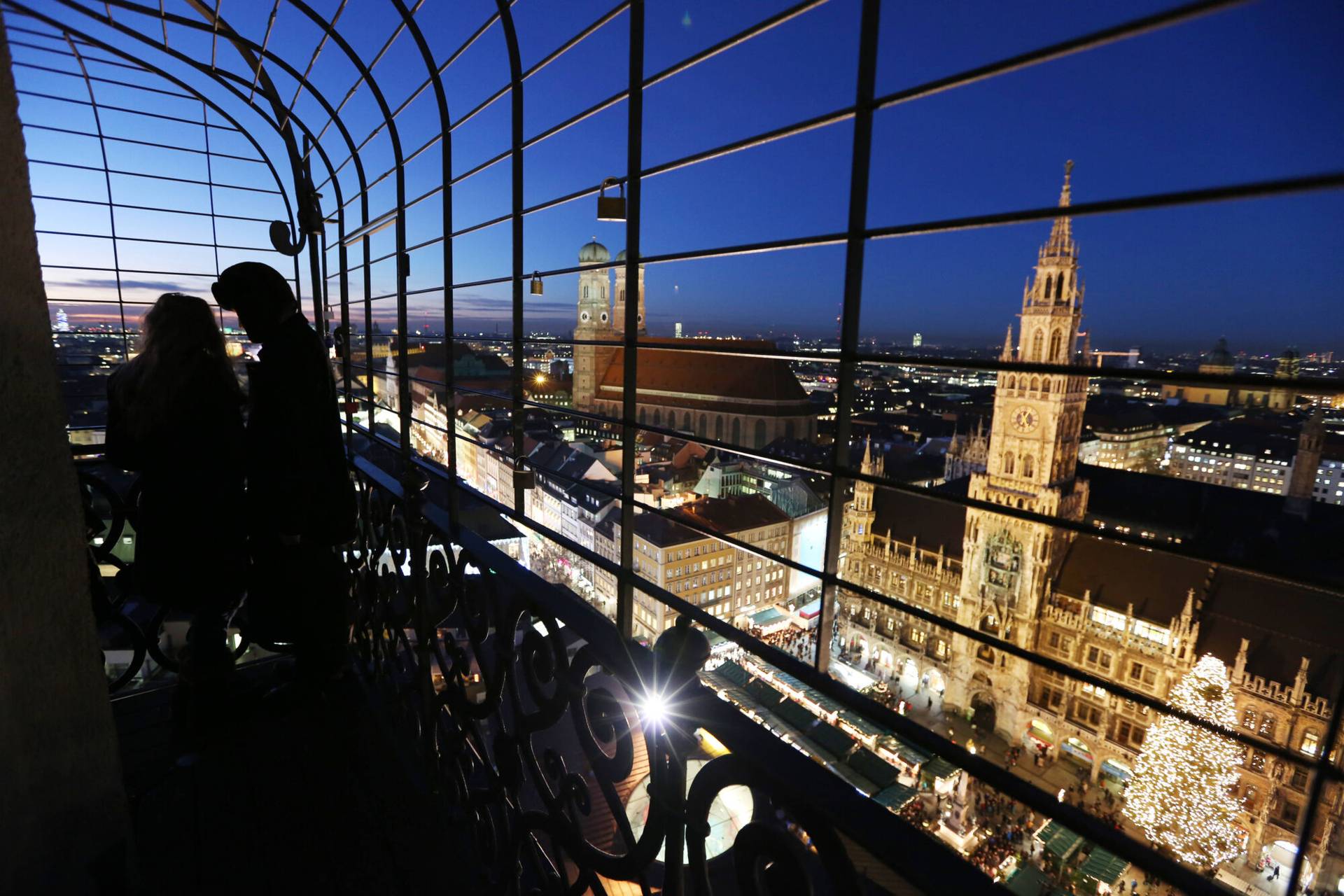
Anyone prepared to ascend the 300+ steps up to the viewing platform in the 91-metre tower should expect to arrive out of breath, though in return you will enjoy magnificent views across Munich and – on a clear day – even as far as the Alps.

The church of St. Peter sits on top of a small hill, now known as the Petersbergl, and has a history that stretches back as far as the 12th century. The first church there was built shortly after the city of Munich was founded in the year 1158. Renovations followed in 1180 and 1220, before the whole site was rebuilt in the second half of the 13th century and following the city fire in 1327. The heart of this second building still stands today.

Eight bells hang in the church tower, including four historical examples from the Late Middle Ages and the Baroque era. If you visit the tower, you can even catch a glimpse of them through the window to the belfry. The smallest and oldest bell in Alte Peter is the Arme Sünder (the “Poor Sinners” bell), which stems back to the period after the city fire of 1327 and used to ring out during executions on Marienplatz. These days, it hangs behind a barred window on the bottom floor of the tower.

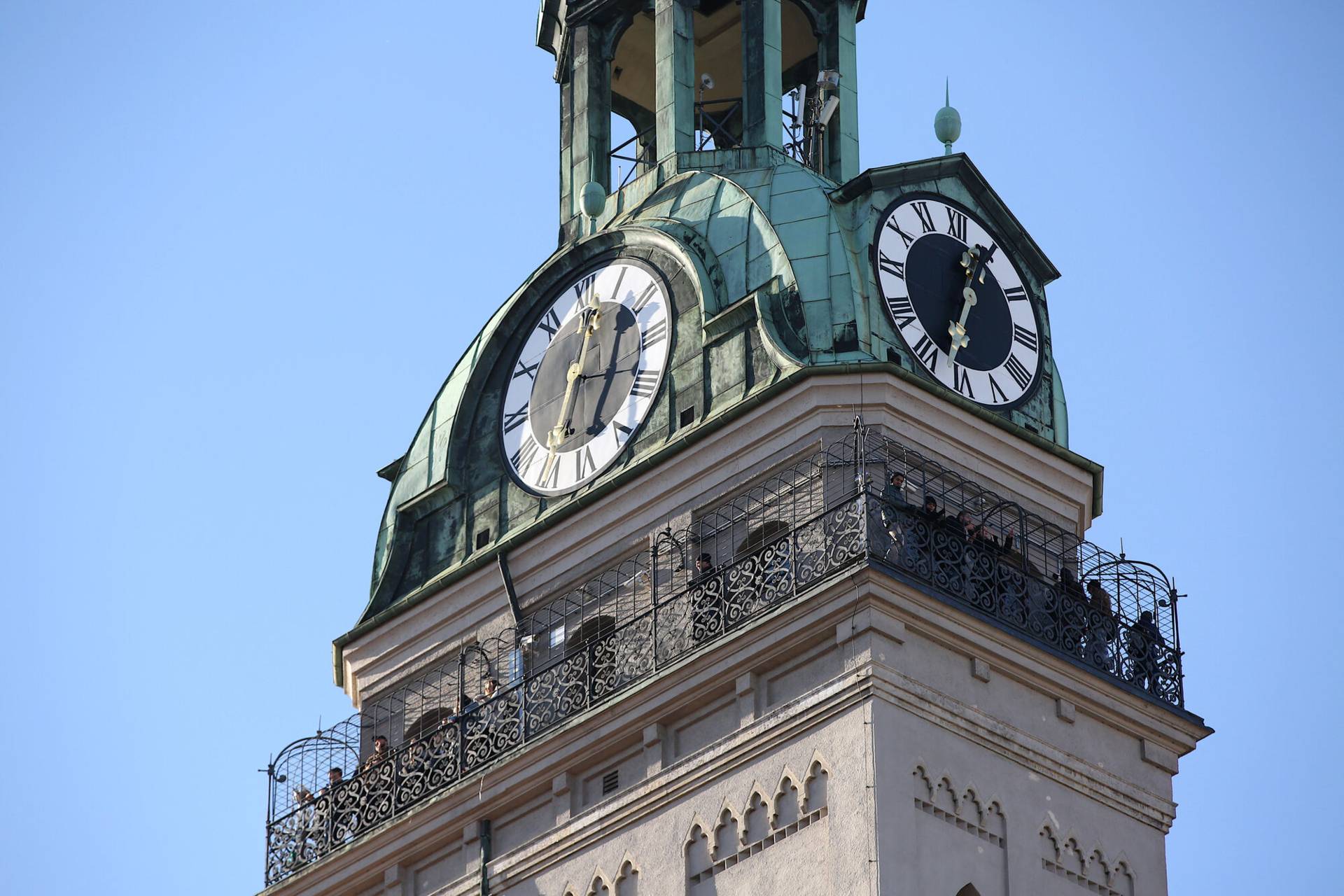
Another thing that makes Alte Peter so unique is its large number of clocks: The tower has eight clocks in total. The Munich-based comic Karl Valentin, who is known for his whimsical sense of humour, came up with the following answer as to why there are so many clock faces on the tower: “Well, of course, it’s so that eight people can check the time at once!”
 

Frequently asked questions about Alter Peter


No one knows exactly why there are so many - one explanation could be that the upper clocks were put up later because the neighbouring houses were built higher over time and people wanted to make sure that they could still read the time. Or you could do like the comedian Karl Valentin, who was the only one who could clearly answer the question with: "Yes, so that eight people can look at the clock at the same time.

A total of 306 steps lead up to the viewing platform, which is 56 metres above sea level. From here you have a wonderful view over the city - in good weather even as far as the Alps. Since Alter Peter does not have a lift, visitors can only climb the tower on foot.

The Alter Peter lives up to its name, as it is the oldest parish church in Munich. It was first mentioned in a document between 1225 and 1226, but over the centuries it has been repeatedly remodelled.

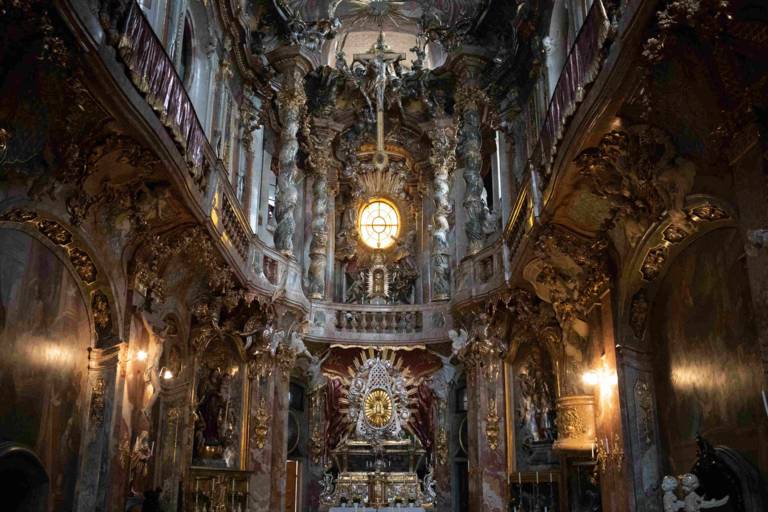
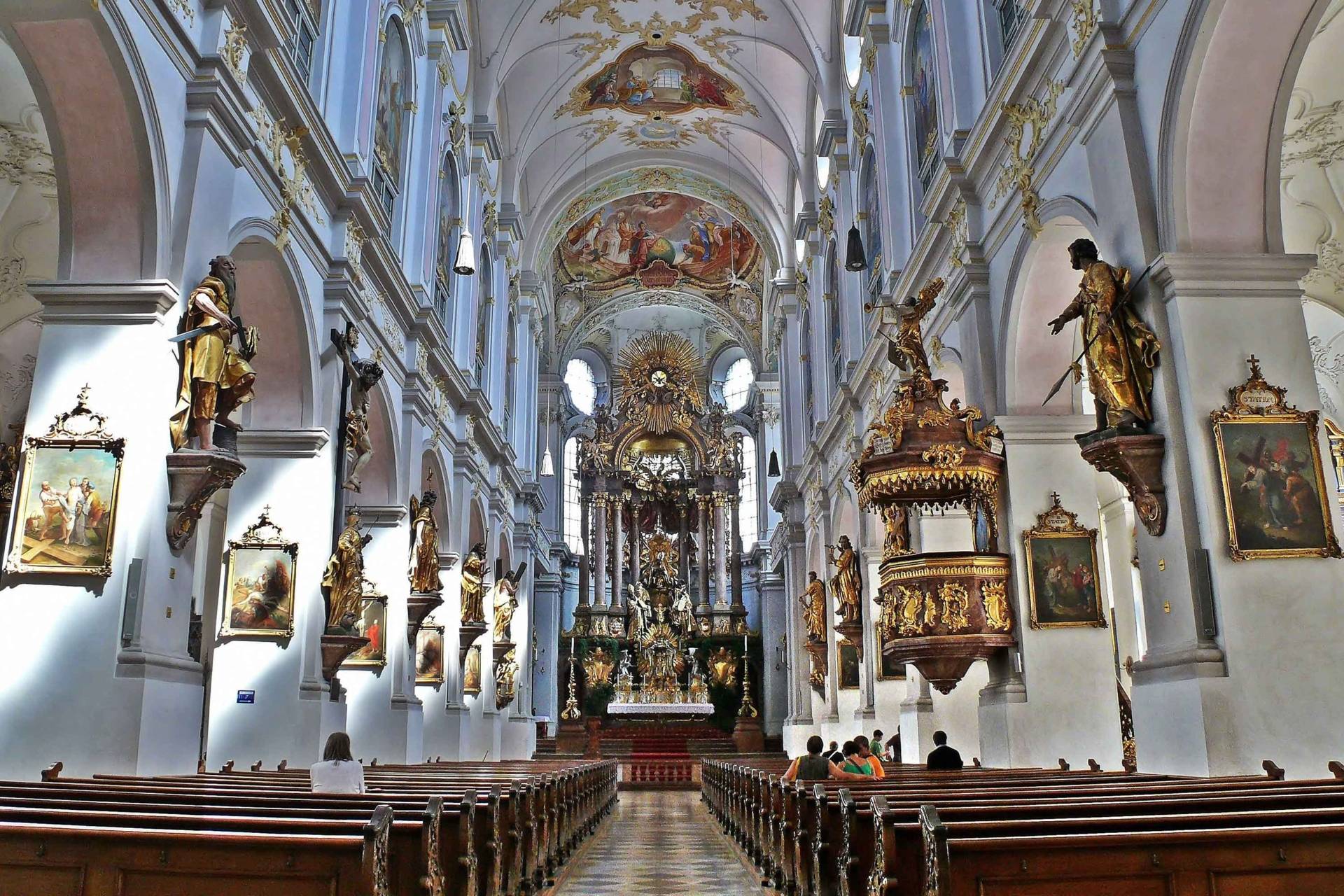
The high altar, which was created by famous baroque artists such as Nikolaus Gottfried Stuber, Johann Georg Greiff and Egid Quirin Asam between 1730 and 1734. In its centre is the golden figure of Peter by Erasmus Grasser with a removable tiara. If the pope dies in Rome, the tiara is removed until a new pope is elected.

The relic of Saint Munditia in the glass coffin. Saint Munditia has been in Old Peter's since 1677 and is the patron saint of single women and single mothers.


Photo: istock/f9photos
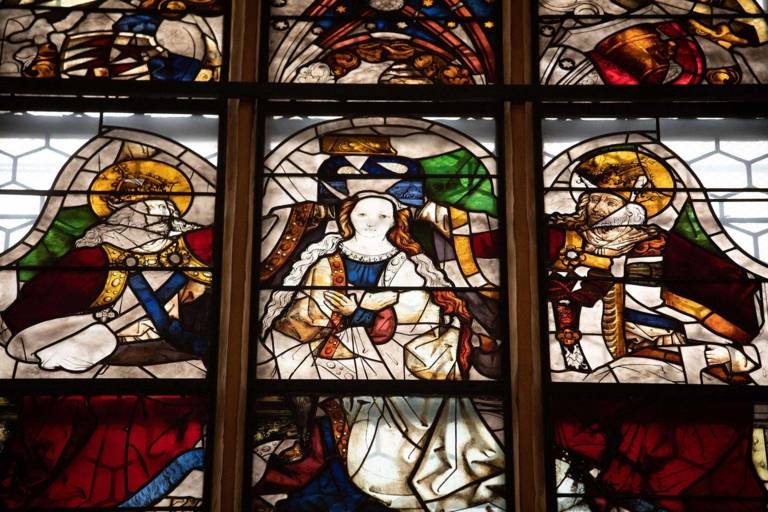
A church window in the Salvatorkirche in Munich

Munich's church windows

The most beautiful windows of the city

Michael Mayer of Mayer’sche Hofkunstanstalt presents the most spectacular church windows.

Fascinating people for centuries: Michael Mayer of Mayer’sche Hofkunstanstalt presents the most spectacular church windows the city has to offer.

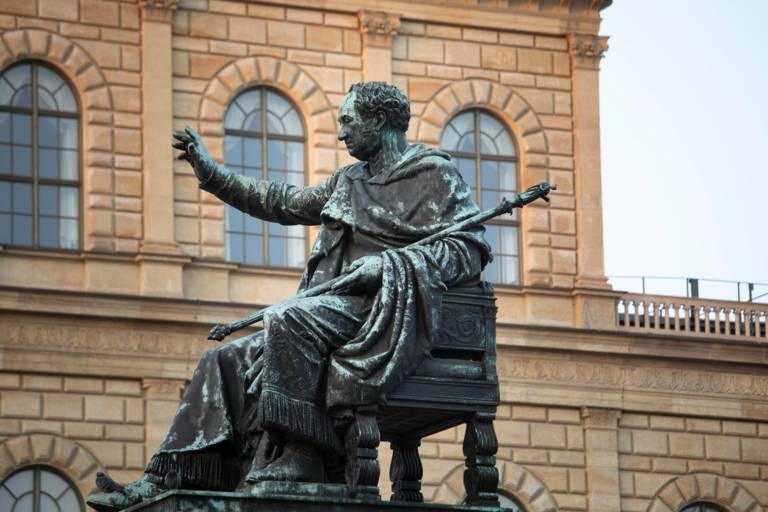
The monument to Max I. Joseph in front of the Residenz

Munich's royal monuments

Four kings and a prince regent

In Munich there are fantastic monuments to admire. Where they are and what makes them so special.

In Munich there are several fantastic monuments to admire. Where they are and what makes them so special: an overview.

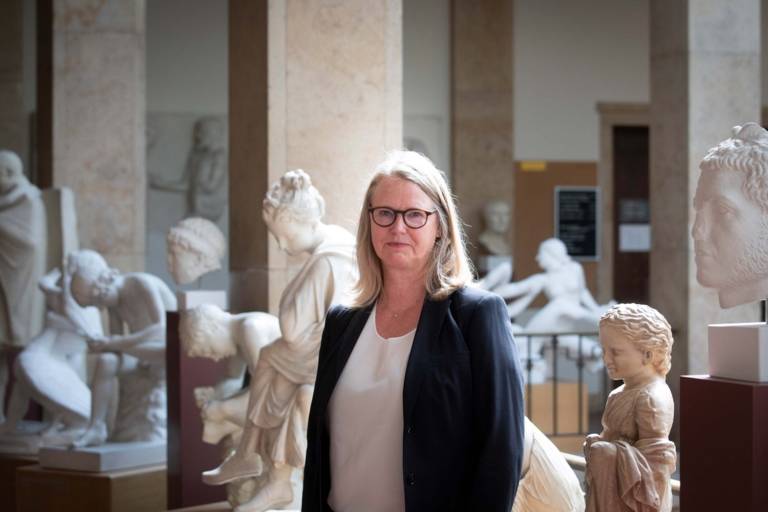
The tour guide Alvestad-Aschenbrenner stands in the Museum for Abgüsse Klassischer Bildwerke Munich

Ludwig I of Bavaria

When Munich became an „Athens on the Isar“

Ludwig I of Bavaria converted Munich into his "„Athens on the Isar“, many buildings still remind us of this today. An interview.

Ludwig I of Bavaria converted Munich into his "„Athens on the Isar“, many buildings still remind us of this today. An interview with a tour guide.

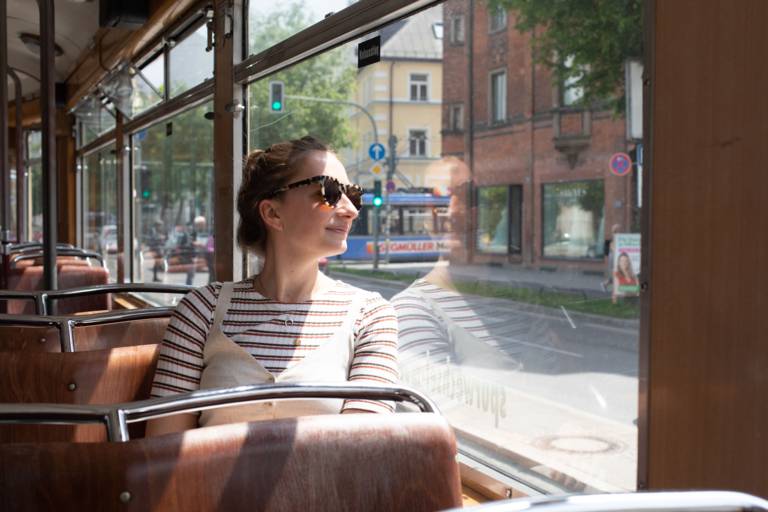
Young woman sitting at a window in a tram in Munich.

Column

A vacation in my own city

Our author used to be a travel blogger. Now she has started to explore her own city: Munich!

Our author used to be a travel blogger. Now she has started to explore her own city: Munich!

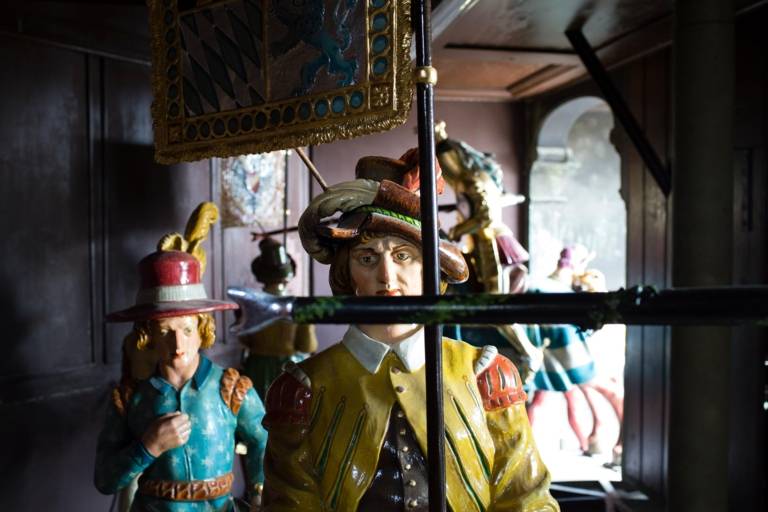
View from the inside of a figure of the carillon in the New Town Hall in Munich.

New Town Hall

The Glockenspiel in ten pictures

An exclusive look behind the scenes.

The Glockenspiel on Marienplatz has been enchanting visitors and locals for over 100 years. An exclusive look behind the scenes.

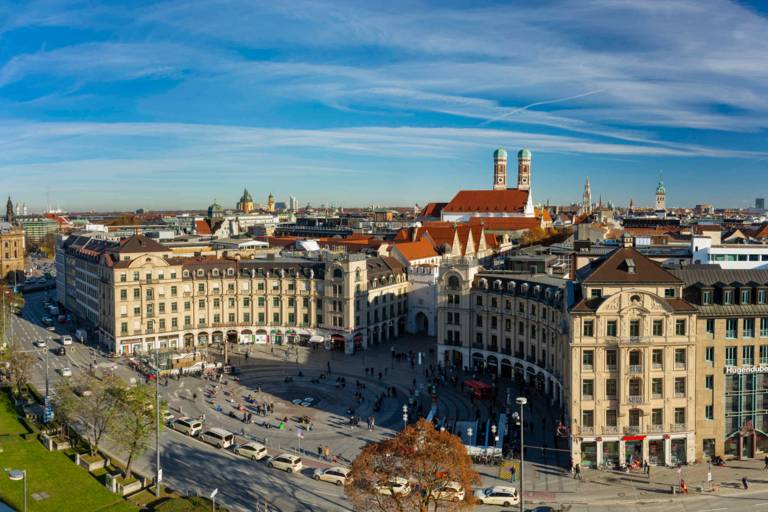
Panoramic view of Karlsplatz / Stachus in Munich with the Frauenkirche in the background photographed from the air.

Munich's city centre

Classical and curiosities

Numerous Munich stories can be told along the roughly one-kilometer-long route between Karlsplatz-Stachus and Marienplatz square. A city walk.

Numerous interesting Munich stories can be told along the roughly one-kilometer-long route between Karlsplatz-Stachus and Marienplatz square. A city walk.

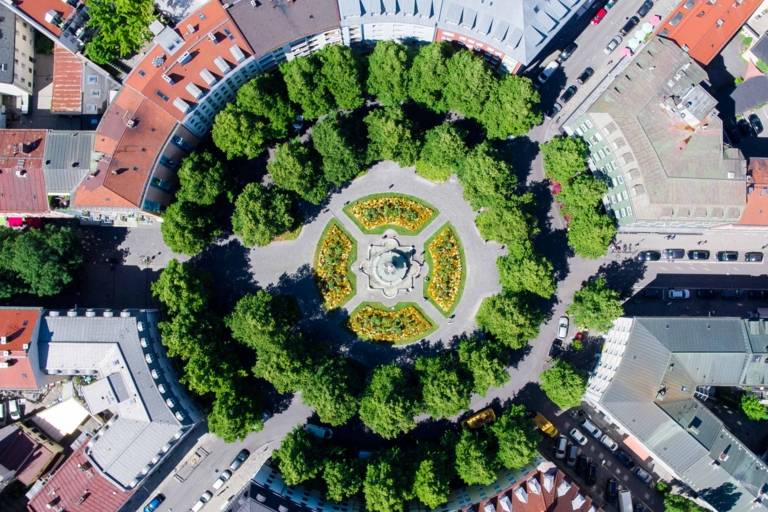
Weissenburger Platz in Munich photographed from above with a drone.

Haidhausen and Au

A village in the city

Haidhausen and Au have developed from working-class quarters into popular residential areas.

When strolling along the narrow streets of the districts Haidhausen and Au with small shops and green courtyards, it almost feels like being in a village in the middle of the city.

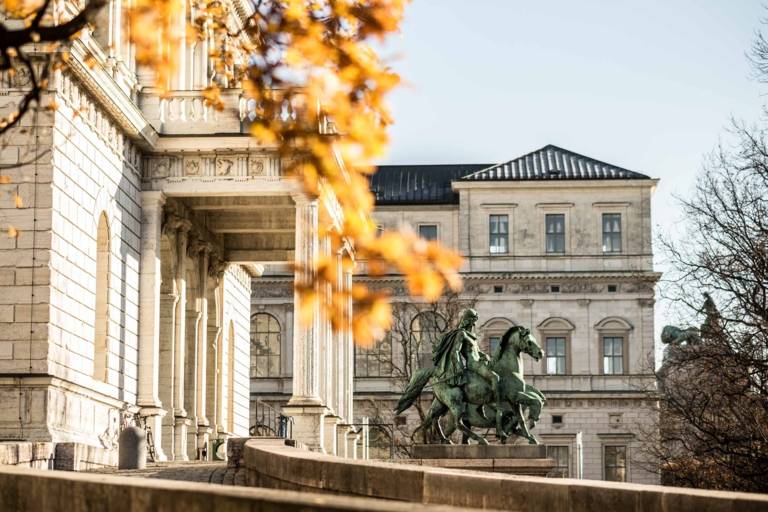
The Academy of Fine Arts in Munich in autumn.

Schwabing

From artists and writers

Around 1900, it was the artists and writers who settled around the university and the art academy and shaped the spirit of Schwabing.

In the heyday of the Schwabinger Bohème around 1900, it was the artists and writers who settled around the university and the art academy and shaped the spirit of Schwabing.

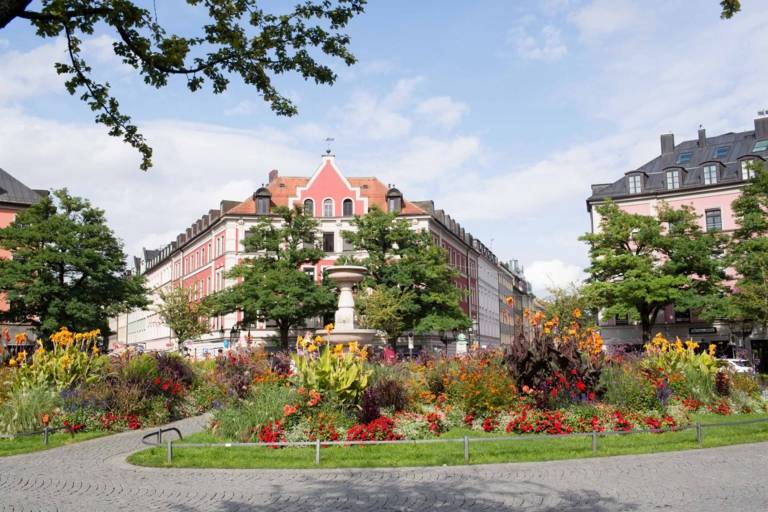
View of flowerbeds at Gärtnerplatz in Munich.

Gärtnerplatz and Glockenbach

Where the night begins

Independent labels, hip bars, pubs and cool inns attract the young and the young-at-heart.

The Gärtnerplatz and Glockenbach neighbourhoods are known as trendy quarters. Their independent labels, hip bars, pubs, cool inns and calm backyards attract the young and the young-at-heart.